 Our Editorial Team — Senior Retirement Analyst, 12+ years advising on self-directed IRAs | Reviewed by Our Editorial Team (IRS Enrolled Agent) | Reviewed: April 2026 | Next Review: October 2026





What Is a Precious Metals Roth IRA? (Rules, Eligible Metals, and How It Works)
A precious metals Roth IRA provides three distinct portfolio functions: inflation protection through tangible asset exposure, diversification away from equity-correlated holdings, and tax-free growth under IRC §408A — a combination unavailable in a standard brokerage account. Unlike a traditional IRA, a Roth IRA has no required minimum distributions (RMDs), which means your physical gold, silver, platinum, or palladium can appreciate in value throughout your lifetime without triggering annual tax events.
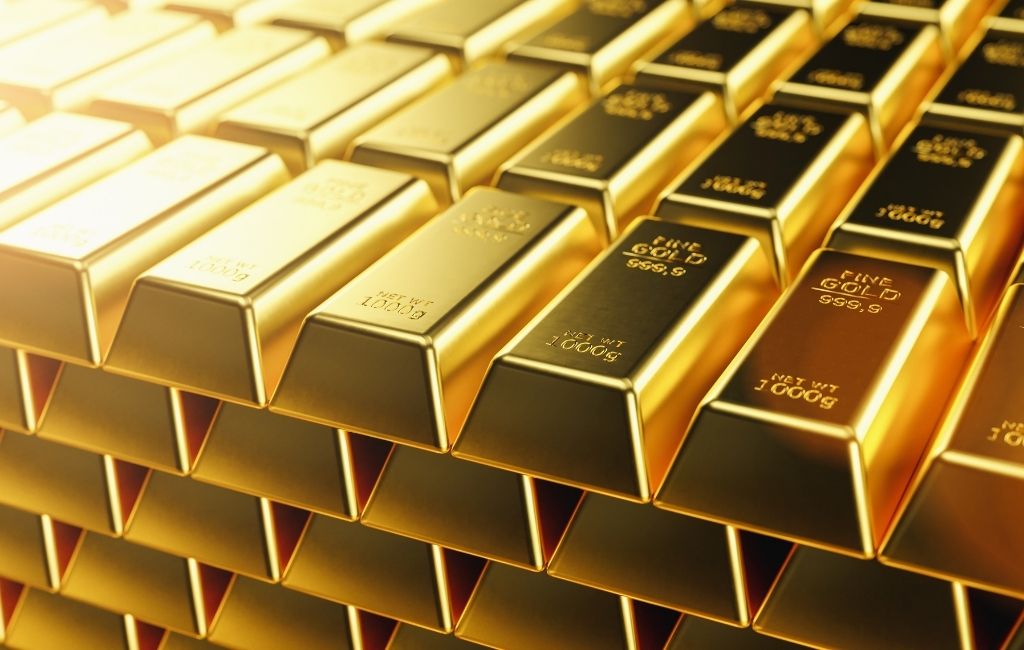
A precious metals Roth IRA holds IRS-compliant gold (.9999+), silver (.999+), platinum (.9995+), and palladium (.9995+), giving the account owner direct legal title to physical bullion inside an approved depository. The IRS classifies collectible coins and numismatics as prohibited — only government-minted coins (American Gold Eagle, American Gold Buffalo, Canadian Gold Maple Leaf) and approved refiner bars (PAMP Suisse, Credit Suisse, Valcambi) qualify.
Prohibited transactions include self-dealing, storing metals at home, or transacting with disqualified persons (family members, fiduciaries). Violating these rules causes the entire IRA to be treated as a distribution, triggering income tax plus a 10% early withdrawal penalty if you are under 59½ (IRS Publication 590-B).
The self-directed IRA custodian (SDIRA custodian) holds legal title on your behalf, files IRS Form 5498 annually, coordinates purchases and sales through your chosen dealer, and arranges insured transport to an IRS-approved depository. You cannot self-custody IRA metals under any circumstance.
Key Terminology
SDIRA (Self-Directed IRA): An IRA held by a custodian that permits alternative assets including precious metals. IRC §408(m): The IRS code section defining which metals qualify. In-kind distribution: Taking physical possession of your metals upon qualified withdrawal, rather than liquidating to cash.
IRS Rules: Eligible Metals and Purity Requirements
The IRS allows gold (.9999 fineness minimum), silver (.999), platinum (.9995), and palladium (.9995) inside a self-directed Roth IRA. Coins must be government-minted; collectibles and numismatics are prohibited under IRC §408(m).
Gold (.9999+ Fineness)
IRA-eligible gold products include American Gold Eagle coins (1 oz, ½ oz, ¼ oz, 1/10 oz), American Gold Buffalo coins (.9999 fine), Canadian Gold Maple Leafs, Australian Gold Kangaroos, Austrian Gold Philharmonics, and gold bars from PAMP Suisse, Credit Suisse, and Valcambi with minimum .9999 fineness. Note: American Gold Eagles are the sole exception — they are .9167 fine (22-karat) but specifically permitted by IRS statute.
Silver (.999+ Fineness)
Popular IRA-eligible silver includes American Silver Eagles (.999 fine), Canadian Silver Maple Leafs, and .999 fine silver bars from approved refiners. Silver offers a lower dollar entry point than gold and carries additional industrial demand from electronics, solar panels, and medical applications.
Platinum and Palladium (.9995+ Fineness)
American Platinum Eagles and Canadian Platinum Maple Leafs qualify for IRA inclusion. Canadian Palladium Maple Leafs are the primary IRA-eligible palladium product. Both metals have significant industrial demand from automotive catalytic converters, electronics, and hydrogen fuel cells.
What Is NOT Eligible
Rare coins, collectible coins, commemorative coins (unless specifically listed in IRC §408(m)(3)), and any bullion below the required fineness thresholds are prohibited. Dealers who recommend high-premium "exclusive" or "limited edition" products should be avoided — these often carry inflated markups of 20–40% above spot price.
Precious Metals Roth IRA Contribution Limits and Income Eligibility (2025)
In 2025, you can contribute up to $7,000 per year to a Roth IRA ($8,000 if age 50 or older), regardless of whether it holds precious metals or traditional securities. Roth IRA eligibility phases out between $150,000–$165,000 MAGI for single filers and $236,000–$246,000 for married filing jointly (IRS Rev. Proc. 2024-25).
If your income exceeds these thresholds, a backdoor Roth conversion — contributing to a traditional IRA and then converting to Roth — remains a legal option. However, the conversion itself is a taxable event. Consult a tax professional to evaluate whether the long-term tax-free growth outweighs the upfront tax cost.
2025 Income Phase-Out Thresholds
Single / Head of Household: phase-out begins at $150,000 MAGI, full phase-out at $165,000. Married Filing Jointly: phase-out begins at $236,000, full phase-out at $246,000. Married Filing Separately: phase-out begins at $0, full phase-out at $10,000. These limits apply to combined Roth IRA contributions across all accounts.
Catch-Up Contributions
Investors age 50 and older can contribute an additional $1,000 per year ($8,000 total in 2025). This catch-up provision applies equally to precious metals Roth IRAs and conventional Roth IRAs. There is no separate contribution limit for precious metals — the limit is per taxpayer, not per account type.
Costs: Custodian Fees, Storage Fees, and Premiums Explained
Expect $50–$300 setup fee, $75–$300/year custodian fee, $100–$150/year storage fee, plus 1–5% dealer premium over spot price. These costs are higher than a zero-fee brokerage IRA but comparable to other actively managed alternative investments.
Setup Fees
Most custodians charge a one-time account setup fee of $50–$150. Some companies waive this fee for initial investments above $25,000 or as a promotional incentive. Augusta Precious Metals, for instance, is known for transparent pricing with no hidden setup charges.
Annual Custodian Fees
Self-directed IRA custodians charge $75–$300 per year for account maintenance, record-keeping, IRS Form 5498 filing, and customer service. Fees may be flat-rate or scaled based on account value (typically 0.5–1.0% of assets under custody for larger accounts).
Storage Fees
IRS-approved depositories charge $100–$150/year for commingled storage and $150–$300/year for segregated storage. Storage fees may be flat or scaled by asset value. All fees are typically paid from funds within the IRA, not out-of-pocket.
Dealer Premiums (Markup Over Spot)
When purchasing metals, you pay the spot price plus a dealer premium of 1–5% for bars and 3–8% for coins. Premiums vary by product, quantity, and market conditions. Gold bars from approved refiners typically carry the lowest premiums. Compare multiple dealers before purchasing.
Sell-Back Spreads
When liquidating metals, dealers buy back at a price slightly below spot (typically 1–3% below). Reputable dealers maintain narrow, transparent spreads. Confirm buyback terms before your initial purchase.
Gold IRA Custodians: What They Do and How to Choose One
A custodian holds legal title to your IRA assets, files IRS Form 5498 annually, and arranges depository storage — you cannot self-custody IRA metals. The custodian is the administrative backbone of your precious metals Roth IRA, separate from the dealer who sells you the bullion.
Custodian Responsibilities
Your SDIRA custodian manages account paperwork, ensures IRS compliance, facilitates metal purchases and sales, coordinates with depositories for insured shipment, provides annual statements, and files IRS Form 5498 (reporting fair market value and contributions) and Form 1099-R (reporting distributions).
Leading Precious Metals IRA Custodians
Equity Trust Company: One of the largest SDIRA custodians with over $39 billion in assets under custody. GoldStar Trust: Specializes in precious metals IRAs with competitive flat-fee pricing. New Direction Trust Company: Offers online account management and transparent fee schedules. The Entrust Group: Over 40 years of experience with self-directed retirement accounts.
Questions to Ask Before Choosing
What are your annual fees — flat-rate or asset-based? Which IRS-approved depositories do you partner with? How long does the account setup process take? What is your process for handling distributions (cash or in-kind)? Do you provide online account access with real-time holdings and statements?
IRS-Approved Depositories: Segregated vs. Commingled Storage
Segregated storage ($150+/year) keeps your bars and coins physically separate in a labeled container; commingled storage ($100+/year) pools identical metals by type and fineness. Both are IRS-compliant, but segregated storage ensures you receive the exact items you purchased upon distribution.
Segregated (Allocated) Storage
Your specific coins and bars are stored in a separately labeled section or container. You receive the exact items you purchased upon distribution or liquidation. Segregated storage costs more ($150–$300/year) but provides greater transparency and peace of mind.
Commingled (Non-Segregated) Storage
Your metals are pooled with identical items owned by other investors. You are entitled to the same type, quantity, weight, and fineness — but not necessarily the exact same coins or bars. Commingled storage is less expensive ($100–$150/year) and equally IRS-compliant.
Top IRS-Approved Depositories
Delaware Depository (Wilmington, DE): The most widely used precious metals IRA depository, offering segregated and commingled options with comprehensive insurance through Lloyd’s of London. Brink’s Global Services: Operates secure vaults in multiple U.S. locations with institutional-grade security. International Depository Services (IDS): Facilities in Delaware and Texas with competitive rates. All depositories maintain $1 billion+ insurance coverage and 24/7 surveillance.
Can You Store IRA Gold at Home?
No. Storing IRA metals at home — even in a safe — violates IRS rules and causes the entire IRA to be treated as a taxable distribution, triggering income tax plus a 10% early withdrawal penalty if under age 59½. "Home storage IRA" promotions are misleading and should be avoided.
Precious Metals Roth IRA vs. Traditional IRA vs. Gold ETF
Roth IRA = tax-free growth with no RMDs; Traditional IRA = tax-deferred growth with RMDs beginning at age 73; Gold ETF = no physical ownership, and gains may be taxed at the collectibles rate (28%) rather than the standard capital gains rate.
Precious Metals Roth IRA
Contributions made with after-tax dollars. All growth and qualified distributions (after age 59½ + 5-year rule) are completely tax-free. No required minimum distributions during the owner’s lifetime. You own physical bullion stored in an IRS-approved depository. Annual costs: $175–$450 (custodian + storage fees).
Precious Metals Traditional IRA
Contributions may be tax-deductible (reducing current-year taxable income). Growth is tax-deferred. Distributions after age 59½ are taxed as ordinary income. RMDs begin at age 73 (SECURE 2.0 Act). Converting a traditional IRA to Roth triggers a taxable event on the converted amount.
Gold ETFs (GLD, IAU)
No physical metal ownership — you hold shares in a trust that stores gold. Gains held longer than one year may be taxed at the 28% collectibles rate, not the lower 15–20% long-term capital gains rate. No custodian or storage fees, but fund expense ratios of 0.25–0.40% apply. Gold ETFs offer higher liquidity but lack the direct ownership and portfolio insurance characteristics of physical bullion.
When a Precious Metals Roth IRA Makes Sense
A precious metals Roth IRA is most valuable when you: (1) already have substantial retirement savings in conventional assets and want 5–20% allocation to tangible assets, (2) are concerned about inflation, currency devaluation, or systemic market risk, (3) want to eliminate future RMD obligations on a portion of your portfolio, or (4) plan to leave tax-free tangible assets to heirs.
Rollover and Transfer Rules (401k, Traditional IRA, SEP IRA)
Direct rollovers from a 401(k), 403(b), TSP, or existing IRA to a self-directed precious metals Roth IRA are tax-free when moving between same-type accounts. Indirect rollovers must complete within 60 days or trigger income tax plus a 10% early withdrawal penalty.
Direct Rollover (Trustee-to-Trustee)
Funds transfer directly between custodians without you taking possession. No tax withholding, no 60-day deadline, no limit on frequency. This is the recommended method for moving retirement funds into a precious metals SDIRA. Request the transfer in writing through your current plan administrator.
Indirect Rollover (60-Day Rollover)
You receive the funds personally and must redeposit the full amount into the new SDIRA within 60 calendar days. Your current custodian will withhold 20% for federal taxes; you must make up the difference from personal funds or the shortfall is treated as a taxable distribution. You are limited to one indirect rollover per 12-month period across all IRAs.
Traditional IRA to Roth IRA Conversion
Converting a traditional IRA (or traditional 401k) to a Roth IRA triggers income tax on the converted amount in the year of conversion. However, all future growth and qualified distributions from the Roth account are tax-free. This strategy is most beneficial when you expect to be in a higher tax bracket in retirement or when current-year income is temporarily low.
Eligible Source Accounts
You can roll over funds from: Traditional IRA, Roth IRA (transfer only), 401(k), 403(b), 457(b), Thrift Savings Plan (TSP), SEP IRA, and SIMPLE IRA (after 2 years of participation). Each source type may have different tax implications upon conversion to a Roth SDIRA.
Is a Precious Metals Roth IRA Worth It? Honest Assessment
A precious metals Roth IRA is worth it for investors seeking tax-free inflation protection who already max conventional Roth contributions and can meet minimum account thresholds ($10,000–$50,000) while tolerating higher annual fees and lower liquidity. It is not a replacement for a diversified equity portfolio — it is a complement.
When a Precious Metals Roth IRA Makes Sense
The ideal candidate has: (1) a portfolio above $100,000 with 80%+ in equities and bonds, (2) a desire to allocate 5–20% to tangible, counterparty-free assets, (3) a long time horizon (10+ years to retirement or beyond), and (4) concern about inflation, currency devaluation, or systemic financial risk.
When It Does NOT Make Sense
A precious metals Roth IRA is not appropriate if you: need income-generating assets (metals pay no dividends), cannot meet the $10,000–$50,000 minimum most dealers require, prioritize liquidity (metal liquidation takes 3–5 business days vs. seconds for stocks), or have not yet maxed employer 401(k) matching.
The Honest Math: Cost Drag Analysis
A precious metals Roth IRA costs $175–$450/year in custodian and storage fees plus 1–8% dealer premiums at purchase — approximately 10–20x the annual cost of a Vanguard or Fidelity index fund IRA. Gold must appreciate at least 0.5–1.5% annually just to break even on fees. Over the past 20 years (2005–2025), gold has averaged approximately 9.4% annual returns — well above the fee drag. Past performance does not guarantee future results.
Gold IRA Historical Performance: What $10,000 in 2005 Is Worth Today
A $10,000 investment in gold at April 2005 prices (~$513/oz) would exceed $60,000 in April 2025 (~$3,100/oz) — a 505% nominal gain that underperforms the S&P 500 total return (~540% with dividends reinvested) but surpasses the 10-year Treasury and provided positive returns through both the 2008 financial crisis and the 2020 COVID crash.
Gold vs. S&P 500 vs. Bonds: 20-Year Comparison
Gold: ~$513/oz (April 2005) to ~$3,100/oz (April 2025) = ~505% nominal gain (~9.4% CAGR). S&P 500 Total Return: ~$10,000 to ~$64,000 = ~540% (~9.7% CAGR including dividends). 10-Year Treasury: ~4.2% average yield = ~$22,800 total. Gold held value through the 2008 crisis (gold rose 25% while stocks fell 50%) and the 2020 crash (gold gained 24% during the year). Past performance does not guarantee future results.
Inflation-Adjusted Returns
Adjusted for cumulative CPI inflation of approximately 65% from 2005 to 2025, a $10,000 gold investment’s real purchasing power grew to roughly $36,500 — a 265% real gain. Gold’s primary function in a precious metals Roth IRA is not to outperform equities but to provide uncorrelated, tax-free returns that preserve purchasing power during periods when equities and bonds simultaneously decline.
Precious Metals Roth IRA Withdrawal Rules and Penalties
A precious metals Roth IRA distributes physical metals or their full cash value completely free of federal income tax once you reach age 59½ and satisfy the 5-year holding rule — no capital gains tax, no ordinary income tax, no RMDs ever during your lifetime.
Qualified vs. Non-Qualified Distributions
A qualified distribution requires two conditions: (1) you are age 59½ or older, and (2) at least 5 years have passed since your first Roth IRA contribution or conversion. Qualified distributions are 100% tax-free and penalty-free. Non-qualified distributions are subject to income tax on earnings plus a 10% early withdrawal penalty under IRC §72(t).
The 5-Year Rule Explained
The 5-year clock starts January 1 of the tax year of your first Roth IRA contribution. Each Roth conversion has its own separate 5-year clock. Contributions (not earnings) can always be withdrawn tax-free and penalty-free at any time, since they were made with after-tax dollars.
In-Kind vs. Cash Distributions
An in-kind distribution means your custodian ships the physical metals directly to you. A cash distribution means the custodian liquidates your metals at spot price and sends you the proceeds. Both are reported on IRS Form 1099-R. Metals are valued at the ask price (spot price plus bid-ask spread) on the date of distribution.
Early Withdrawal Exceptions
Certain early withdrawals avoid the 10% penalty (but not income tax on earnings): first-time home purchase (up to $10,000 lifetime), qualified higher education expenses, unreimbursed medical expenses exceeding 7.5% of AGI, disability, and substantially equal periodic payments (SEPP/72(t) distributions).
Prohibited Transactions and IRS Compliance Risks
A prohibited transaction under IRC §4975 — home storage, buying from a disqualified person, or self-dealing — disqualifies the entire IRA in the year of violation, making the full account balance taxable as ordinary income with potential 10% early withdrawal penalties.
What Is a Prohibited Transaction?
IRC §4975 defines a prohibited transaction as any direct or indirect transaction between an IRA and a disqualified person. The three most common violations: (1) Home storage — physically taking possession of IRA metals before a qualifying distribution, reinforced in IRS Chief Counsel Advice 202153007. (2) Disqualified persons — buying metals from or selling to yourself, a spouse, parent, child, grandchild, or any entity you control 50% or more. (3) Self-dealing — using IRA metals as collateral for a personal loan.
Disqualified Persons: The Full List
Under IRC §4975(e)(2), disqualified persons include: the IRA owner, spouse, lineal ascendants and descendants (parents, children, grandchildren) and their spouses, any fiduciary of the IRA, any entity in which the IRA owner holds 50% or more ownership, and any officer, director, or highly compensated employee of such entity.
Consequences of Disqualification
The entire IRA balance is treated as a taxable distribution in the year of the prohibited transaction. For a $100,000 precious metals Roth IRA held by a 45-year-old in the 24% tax bracket, disqualification would trigger approximately $24,000 in federal income tax plus a $10,000 early withdrawal penalty (10%) — a $34,000 loss. State income taxes add further liability.
How to Stay Compliant
Use only IRS-approved custodians and depositories. Never take physical possession of IRA metals before a qualified distribution. Never buy metals from or sell to family members using IRA funds. Never use IRA metals as collateral. File IRS Form 5498 annually through your custodian.
Precious Metals Roth IRA vs. Fidelity/Vanguard: Why You Need an SDIRA
Fidelity and Vanguard do not offer physical precious metals in IRAs; their gold products are ETFs (GLD, GLDM, IAU) taxed at collectibles rates up to 28% — investors who want physical gold, silver, platinum, or palladium in a tax-advantaged account must use a self-directed IRA custodian.
Why Fidelity and Vanguard Cannot Hold Physical Metals
Major brokerages like Fidelity, Vanguard, Charles Schwab, and TD Ameritrade are not licensed as self-directed IRA custodians for alternative assets. They lack depository partnerships, metal handling infrastructure, and the IRS compliance framework required to custody physical bullion.
Fidelity and Vanguard Gold Alternatives
Fidelity offers gold ETFs including SPDR Gold Shares (GLD), iShares Gold Trust (IAU), and SPDR Gold MiniShares (GLDM), plus Fidelity Select Gold Portfolio (FSAGX). Vanguard offers similar ETF access plus Vanguard Global Capital Cycles Fund. These are securities, not physical metals — you own shares in a trust, not actual bullion.
Tax Implications: Physical Gold vs. Gold ETFs
Gold ETFs held outside an IRA are taxed at the 28% collectibles tax rate on long-term gains — higher than the standard 15–20% long-term capital gains rate for stocks. Inside a Roth IRA, ETF gains are tax-free regardless, but you still lack physical ownership, counterparty-free storage, and the portfolio insurance characteristics of holding actual bullion.
Best Precious Metals Roth IRA Companies (2025)
Augusta Precious Metals, Goldco, and American Hartford Gold lead our ranked list based on fees, BBB rating, minimum investment requirements, product selection, and verified customer reviews. Rankings are updated quarterly and reflect our editorial team’s independent evaluation.
Our Ranking Methodology
We evaluate each company across seven criteria: (1) BBB and BCA ratings, (2) fee transparency and total cost structure, (3) minimum investment requirement, (4) breadth of IRS-approved product selection, (5) buyback program terms, (6) educational resources and customer support quality, and (7) verified customer review scores across TrustPilot, Google, and BBB. Data last verified: March 2025.
Why Augusta Precious Metals Ranks #1
Augusta holds an A+ BBB rating with zero complaints in 10+ years, offers a free one-on-one educational web conference (no sales pressure), provides transparent pricing with no hidden fees, assigns a dedicated lifetime account manager, and maintains competitive premiums. Minimum investment: $50,000.
What Sets Top Companies Apart
The best precious metals IRA companies share four traits: transparent fee disclosure before commitment, strong buyback programs with competitive pricing, educational resources that prioritize investor knowledge over sales, and dedicated account representatives who provide support for the life of the account.